

How to Spot Hail Damage on Your Roof (Before It Starts Leaking)
A homeowner's guide to identifying hail damage from the ground and gutters — without climbing on the roof. What to look for, what to photograph, and when to call.
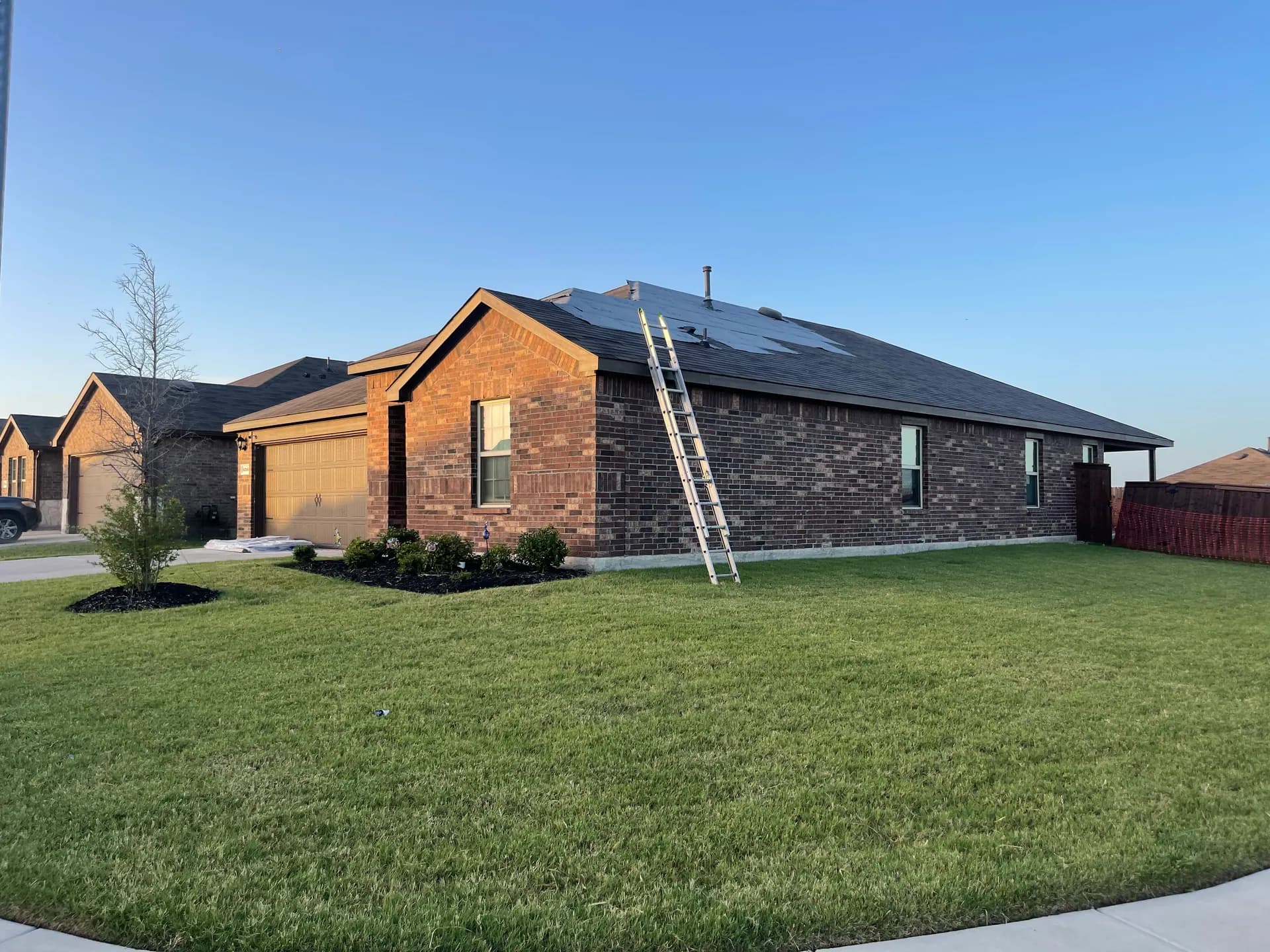
Hail damage doesn't always leak immediately. Bruised shingles that look fine from the street can fail 6–18 months later — after your claim window has closed. Here's how to spot real damage without climbing on the roof.
The Claim Window Reality
Most Texas insurance policies give you one year from the date of damage to file a hail claim. That sounds like a lot. In practice:
- You may not even know a storm produced hail
- Damage can look fine for 3–9 months before visible failure
- Adjusters get stricter about older storm dates ("how do we know it was this storm?")
If a hail event passes through your zip code, inspect within 6 months even if nothing looks wrong.
Check These Places First (No Ladder Needed)
1. The Gutters
What to look for: Fresh granules collecting in gutters, downspout outlets, or at the ground where downspouts end.
Asphalt shingles have a layer of mineral granules baked onto the surface. Hail knocks granules off. You'll see a layer of black-and-gray grit in the gutters that looks like coarse sand.
What it means: Some granule loss is normal over 5+ years. A fresh layer right after a storm means hail impact.
2. AC Condenser Units
What to look for: Dented aluminum fins on the condenser (the big square unit outside the house).
AC fins are thin aluminum and show hail impact clearly. If your condenser fins are bent/dented, your roof took the same hail.
What it means: Strong indicator that the hail was large enough to damage the roof. Adjusters often use AC unit damage as corroborating evidence.
3. Window Screens and Sills
What to look for: Punctures, tears, or dents in window screens. Paint chips on wood windowsills.
4. Fence Tops, Decks, and Outdoor Furniture
What to look for: Dimples or dents on softer wood tops. Chipped paint on stained composite decking. Dents on patio furniture.
5. Soft Metal Features
What to look for: Dents on metal mailboxes, patio furniture frames, chimney caps visible from the street, metal garage doors, downspouts.
6. Plant Damage
What to look for: Stripped leaves, broken branches on small trees and shrubs, especially on the south/southwest side (where most DFW hail comes from).
What Real Hail Damage on Shingles Looks Like
If a roofer is on the roof (not you), these are the signs they'll document:
- Circular dark spots 1/4" to 2" in diameter where granules were knocked off
- Cracked or bruised mat — the spots feel soft under finger pressure
- Missing or loose shingle tabs from wind accompanying the hail
- Dented metal flashing around chimneys, vents, skylights
- Dented gutters and downspouts
What Is NOT Hail Damage (Adjusters Will Call This Out)
- Normal granule loss from age (even distribution, not localized)
- Blistering from manufacturer defects or heat
- Foot traffic marks from installers walking on the roof
- Tree branch impact — looks different, often linear
- Mechanical damage from ladders, tools, or previous contractor work
A contractor who tries to write these up as hail damage is either untrained or trying to pad the claim. Both are bad.
Before You Call
Document what you can from the ground:
- Date of the storm — note the exact date. Search "DFW hail [month year]" for corroboration.
- Photos of: AC unit, fence tops, deck, fresh granules in gutters, any visible damage
- Check roof for raised shingles from the ground — often visible
- Interior check: Ceiling spots, attic after rain (bring a flashlight)
When to Call a Contractor (Not the Insurance Company Yet)
Call a licensed roofing contractor for a free damage inspection first. A good contractor will:
- Photograph the roof with a drone or from up close
- Show you the photos (no contractor should say "trust us, it's bad" without evidence)
- Tell you honestly whether damage is claim-worthy
- Explain what the claim process looks like before you file
If damage is claim-worthy, file the insurance claim. If the contractor says the damage isn't significant, don't file — filing a denied claim can hurt your claim history.
When to Call the Insurance Company
Only after you have documented evidence that hail damage exists. Filing a claim with no documentation leaves you reliant on the adjuster's initial inspection, and adjusters miss things.
Do NOT sign a contract with any contractor before the claim is approved. Texas law requires a 72-hour cooling-off period on storm-damage contracts, but the best practice is: inspection first, claim second, contractor selection third (or confirmed).
The "Storm Chaser" Warning
After major DFW hail events, out-of-state "storm chaser" contractors show up door-to-door. Red flags:
- Truck plates from another state
- "Sign now or the deal is gone" pressure
- "We'll handle everything — just sign here"
- "We'll waive your deductible" (this is insurance fraud in Texas)
- No local office or reviews
Work only with DFW-based, locally-licensed contractors that have been in business 5+ years. They'll be here when you need warranty work done.
Ready to Start?
Free on-site estimate — no pressure.
Typical callback under 24 hours across DFW.