

Gutters and Gutter Guards in DFW: What Actually Works
Seamless 5" vs 6" gutters, hidden hangers, downspout sizing, and the honest truth about gutter guards in Texas. A practical DFW gutter guide.
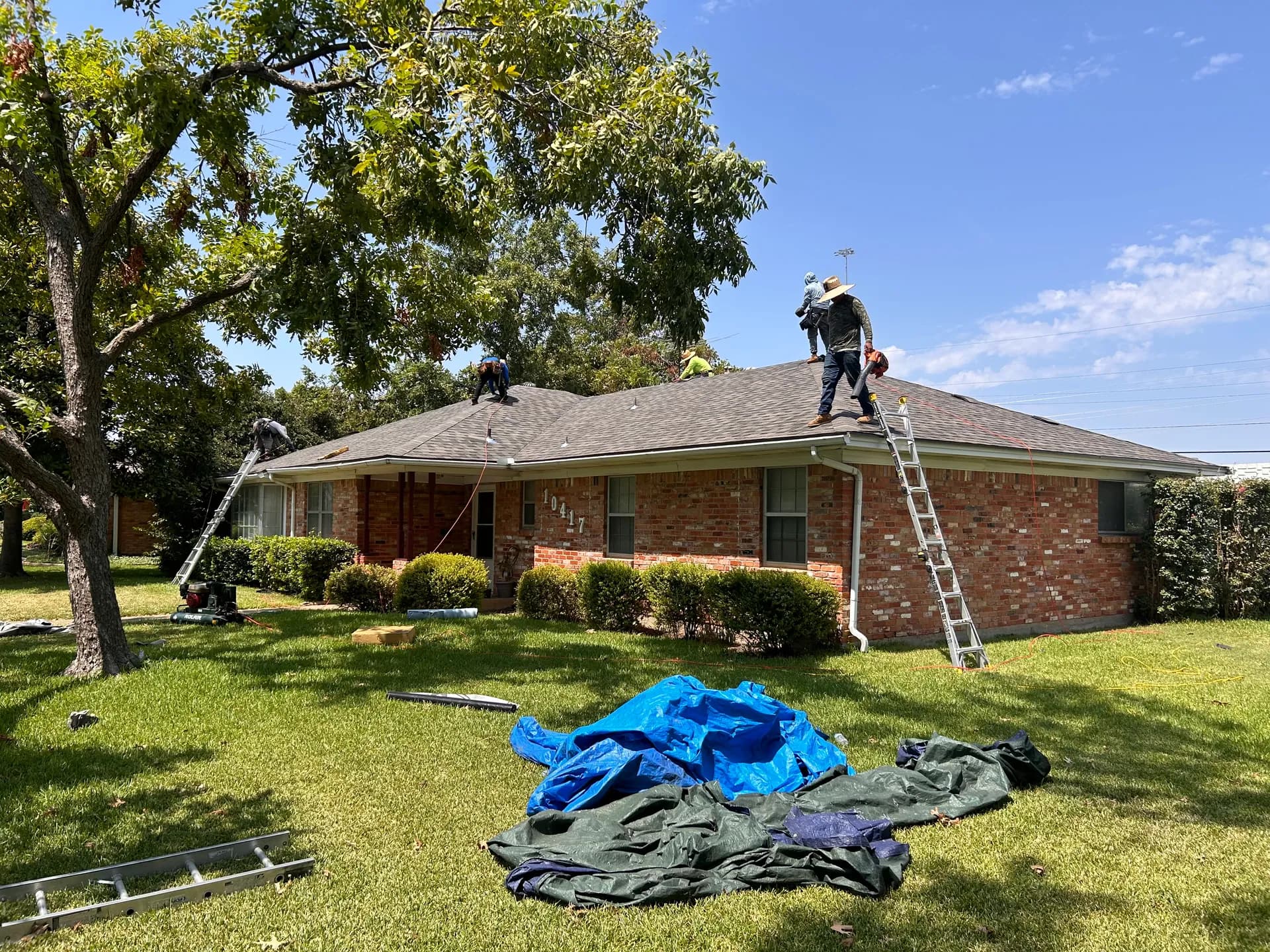
Gutters get ignored until they're falling off the fascia or dumping water at the foundation. Good gutters are cheap insurance for the two most expensive things on a house: roof decking and foundation. Here's a practical DFW guide.
5-inch vs 6-inch Gutters
- 5-inch K-style: Standard for most homes under 2,000 sq ft of roof area
- 6-inch K-style: Recommended for homes over 2,000 sq ft, homes with steep-pitched roofs that concentrate water, or areas with frequent heavy downpours
DFW storms can drop 2–3" of rain in 30 minutes. 6-inch gutters handle that volume; 5-inch gutters overflow.
Our default for new installs in DFW is 6-inch unless the home is small and the budget is tight. The cost difference is roughly 20–30%.
Seamless vs Sectional
Seamless gutters are cut on-site from a long aluminum coil, so the only seams are at corners and downspouts. Sectional gutters come in 10-ft pieces that are seamed every 10 feet.
Seamless always wins on durability. Every seam is a future leak point. Modern installs are almost universally seamless.
Downspout Sizing
A 5-inch gutter pairs with 2x3 downspouts. A 6-inch gutter pairs with 3x4 downspouts (40% more capacity).
Proper downspout count for DFW:
- One downspout per 35–50 linear feet of gutter (conservative for DFW storm volume)
- Corner elbows add at least 20% pressure loss — avoid long runs with multiple 90° turns
- Extensions to move water 4–6 ft from the foundation
Undersized or underserved downspouts back water up into the gutter — you see waterfalls off the gutter edge during heavy rain. That's a downspout problem, not a gutter problem.
Hidden Hangers vs Spikes
Hidden hangers: Screws into the fascia board every 24 inches, with the gutter clipping into the hanger. Modern standard.
Spike-and-ferrule: 8-inch nails driven through the gutter into the fascia. Reads as dated; spikes back out over years.
Always hidden-hanger on new installs. If you have spike-and-ferrule gutters from the 90s, the first sign of failure is gutters visibly pulled away from the fascia.
Gutter Guards — The Honest Truth
DFW has less tree canopy than the Pacific Northwest, so gutter guards solve a smaller problem here. But they do help, especially for:
- Homes near mature oaks (pollen + leaves + catkins)
- Homes with pine trees (needles clog K-style gutters)
- Second-story gutters you can't easily clean
- Homes with steep pitches where leaves collect at downspouts
Types and How They Perform
Screen-type guards (fine mesh, stainless or aluminum): Best for most DFW applications. Stops leaves, acorns, most seeds. Doesn't stop fine pollen and shingle granules. Needs occasional cleaning on top.
- Cost: $8–14 per linear foot installed
- Lifespan: 15–25 years
- Brands: LeafFilter, Gutter Helmet (both franchised; quality varies)
Hood / reverse-curve guards: A solid hood that lets water follow a curve into the gutter while leaves slide off. Works well but can overflow during heavy DFW storms because the water clings to the curve.
- Cost: $14–22 per linear foot installed
- Lifespan: 20+ years
Foam inserts: Foam filler that sits inside the gutter. Cheap, effective for 3–5 years, then degrades.
- Cost: $2–4 per linear foot (DIY)
- Lifespan: 3–5 years
Brush inserts: Similar to foam but bristle brushes. Slightly better than foam for debris.
- Cost: $3–5 per linear foot (DIY)
- Lifespan: 5–8 years
What We'd Pick for DFW
For most DFW homes: stainless mesh screen guards. Balance of cost, performance, and lifespan. Go with heavier foam or brush inserts only if budget is tight.
Avoid cheap plastic guards — they UV-degrade in 3–4 years.
Color Matching
Modern seamless aluminum coil comes in 30+ colors. Match the gutter to your fascia color, not your roof color — gutters should disappear into the trim line, not draw the eye.
Common Problems We Fix
- Gutters detached from fascia — usually rotted fascia board, not gutter failure. Fix requires removing gutter, replacing fascia, reinstalling gutter.
- Standing water in gutters — insufficient slope (should be 1/4" every 10 ft toward the downspout). Re-hanging the gutter fixes it.
- Downspout dumps at foundation — add 4–6 ft extensions, or underground drain line to daylight 10+ ft from house.
- Gutters overflow during storms — upsize to 6-inch or add more downspouts.
- Rust streaks on siding — old galvanized gutters. Replace with aluminum.
Cost to Install New Gutters
For a typical 2,500 sq ft single-story DFW home:
- 5-inch seamless aluminum, standard: $1,400 – $2,400
- 6-inch seamless aluminum: $2,000 – $3,400
- Copper (rare but beautiful): $6,000 – $14,000
- Add mesh gutter guards: +$1,200 – $2,800
Two-story homes run 30–50% more due to ladder / lift setup.
Maintenance
With guards: clean 1x/year, inspect after major storms.
Without guards: clean 2–3x/year minimum — fall is critical, and late summer after oak catkins drop.
Clogged gutters are the #1 cause of fascia rot and foundation water damage in DFW. An hour of cleaning each season prevents thousands in repair.
Ready to Start?
Free on-site estimate — no pressure.
Typical callback under 24 hours across DFW.